Child Maltreatment in Military Vs. Non- Military Families
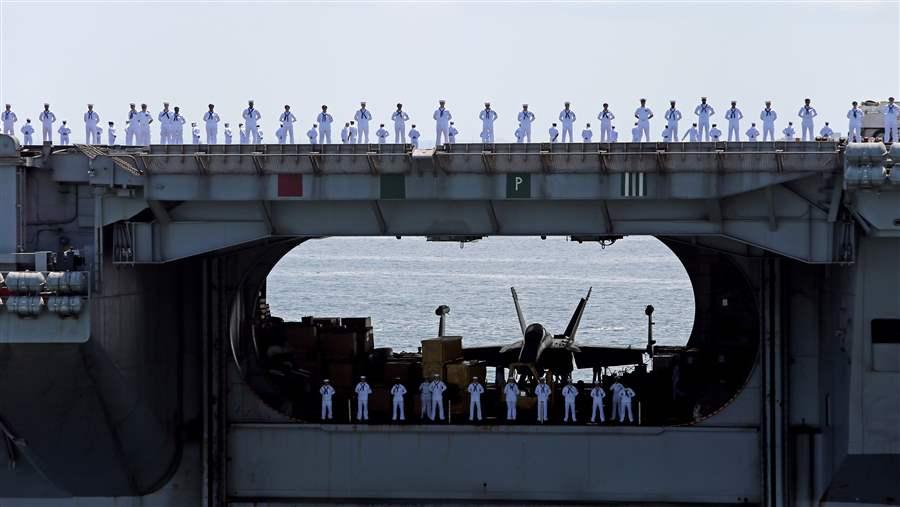
Military families face unique stresses that may put armed services children at higher risk of maltreatment. Pentagon officials are pushing for state laws to crave better reporting of suspected kid abuse and neglect.
© The Associated Press
Advocates for children celebrated last year when President Barack Obama signed a law meant to proceed armed services officials from concealing child abuse and neglect on war machine bases. But U.Due south. Department of Defense officials say the law doesn't address ane key reason why armed forces children who are mistreated may not be getting all the help they need.
Talia'south Police force, named for a 5-year-erstwhile girl who was killed past her soldier male parent on a military base of operations in Hawaii, requires military officials to immediately report any suspected kid abuse or neglect involving armed forces families to state social services agencies. But there is no reciprocal requirement for social services agencies — the agencies aren't required to allow the war machine know about reports of suspected child abuse and fail in military families.
That'southward a problem, Pentagon officials say, considering if the military doesn't know nearly the suspected abuse, it can't connect families to the vast resources it has to assist victims and treat abusers. Doing so is especially urgent now, the officials say, as many social services agencies face budget restraints and lack the resources to help families in need.
For the past three years, Pentagon officials have been asking states to enact laws or gear up policies that require local child protective agencies to ask families they work with if they are in the armed forces, and, if they are, to immediately study any suspected abuse or fail to the military. 15 states have enacted such laws or started to follow such policies that were already in place. 9 more states are considering similar bills this year.

Addressing child abuse and neglect in the military can be complicated. Without the laws, the military may not find out about the fail or abuse until a service member is charged criminally. The laws crave reporting far earlier that — shortly after child protective services finds out about suspected abuse.
Simply armed services families, kid protective workers and others worry that if suspected corruption by a service member is reported to the military, it could be career-ending.
Social service officials say they consider the military to exist a service member's employer, and in other circumstances they wouldn't tell employers virtually suspected child maltreatment — especially before it's been substantiated.
Harold Cooney, who works on state policy as a northeast regional liaison for the Defense Department, said when he hears this business, he reminds social service workers that most employers don't have an entire sectionalization dedicated to treating abusers and helping their families.
The military wants to know every time ane of the roughly 1 1000000 children with parents in the armed services may have been victimized, so every accusation can exist addressed, said Kathy Robertson, plan managing director of the Defense Department's Family Advocacy Program.
"It impacts the kid, the whole family and the war machine unit," Robertson said. "Our whole goal is to strengthen military machine families and to rehabilitate them."
But not everyone agrees that the military is doing all it can to protect children. The armed services has received criticism in the last few years from advocates for children for declining to study to police force and local social services when it knows of abuse and neglect, and for how information technology addresses it.
Reports of Abuse
The Family Advocacy Plan has about ii,000 counselors, clinicians and other employees stationed at military installations to assist families in which abuse or fail may have occurred. Along with counseling for victims and treatment for perpetrators, the program offers prevention services such every bit classes for new parents.
Once suspected child maltreatment is reported to the program, clinicians decide whether it meets the program'due south definitions of abuse and fail. That conclusion is not used for legal proceedings, but rather to decide whether the plan should formally document the abuse or fail and require treatment.
Robertson said the program'southward criteria for determining maltreatment are less forgiving than those used by land kid protective services agencies. "We err on the side of prevention," she said. "We really try to engage that family."
In the terminal decade, the rate of suspected child maltreatment occurrences reported to the Family Advancement Program, likewise equally the rate of occurrences meeting the program'south criteria for abuse and fail, have both increased. About seven instances of child maltreatment were reported per 1,000 military children last fiscal year, compared to five per i,000 children in financial 2007, according to a contempo Defence Department study.

The increment was primarily due to an increase in reports of child fail, including a lack of supervision appropriate for the child'southward historic period and exposure to physical hazards such every bit bathtubs, electric outlets and dangerous cribs. Of the 13,916 instances reported to the programme concluding fiscal year, 6,998 met the military'south criteria for child corruption or neglect; iv,960 children were victims of abuse or neglect.
The rate of child maltreatment reported to the military is nearly one-half of what is reported in civilian families, according to the report. Merely David Rubin, director of PolicyLab at Children's Hospital of Philadelphia, said the bodily charge per unit of abuse and fail is probably about the same as in the civilian population, or perhaps higher.
In a written report released concluding year, Rubin and a group of researchers at PolicyLab found that just 1 in 5 U.Due south. Army soldiers' children who received a medical diagnosis of kid abuse or neglect had a corresponding Family Advocacy Program report. The reason for that, Rubin said, is not because the military knew virtually maltreatment and ignored it, just rather that military officials were but never told nearly the doctors' findings.
"When I think virtually this late at night," Rubin said, "I think at that place are kids out there that aren't getting reported. And what's the magnitude of that?"
Military officials insist that getting treatment or other help from the military won't touch a service member's career. The piece of work of the Family Advocacy Plan is split up from war machine courtroom proceedings that are used to determine punishment for a crime. According to armed services rules, a commander decides when to start military court proceedings, and the commander can't take any action simply because of a finding from the Family Advocacy Plan.
When a service member is accused of a crime such as child abuse or neglect, they can be tried in either civilian or war machine court, or both. Penalty in military court tin can effect in jail time, a reduction in rank or a dishonorable discharge.
Military Resources
In 2015, a national commission examined how to ensure that no children die from corruption or neglect. To help armed services children, the commission recommended federal legislation to require information sharing betwixt state agencies and Defence Department family unit advocacy offices.
The Defence force Department is asking states, not Congress, to have these steps because the rules will need to be administered and enforced at the land level, and they should be crafted to local officials' liking, said Bill Huleatt, a social worker for the Family Advocacy Program.
Even in states that haven't enacted these laws, many canton social services agencies accept already agreed to study incidents to family advancement offices at local bases. But whether that is happening is unclear.
In Maryland, which does not require social services agencies to report kid maltreatment to the military, Anne Arundel Canton's social services bureau has agreements with the 2 military installations there: Fort Meade and Naval Back up Action Annapolis. Merely the county still doesn't e'er study to military bases, co-ordinate to Susan Tyzack, assistant director of social services. If it is a serious event and the kid is in danger, it does. If not, the county asks for the family's permission to tell the base, and most of the time, she said, the family unit agrees.
Maryland state Del. Geraldine Valentino-Smith, a Democrat, introduced a bill this year to require agreements betwixt local social services agencies and the war machine. She said at least i base in the country was having difficulty establishing agreements with surrounding counties. The bill failed, merely Valentino-Smith said she would introduce it again if the issue doesn't get solved at the local level. Social services agencies in the land are facing budget restraints, and the military'south resources could help, she said.
Stigma and Stress
Cooney, the Pentagon liaison in the northeastern states, said he sometimes has a hard time convincing service members that having suspected corruption or neglect reported to the military won't tarnish their career.
Simply Cooney likewise acknowledges that there are times when punishment is warranted. Speaking to a Maryland Business firm committee because Valentino-Smith's bill this year, Cooney told lawmakers, "if he's abusing a child or a spouse, maybe it should be detrimental to his career, or her career."
Whitney Gregg, a counselor nigh Fort Bragg in Fayetteville, North Carolina, said the military families she works with are often concerned that information about their relationship or mental health bug will somehow brand information technology back to their supervisors.
Ofttimes, she said, they want to "keep it within the family unit," in part because of the stigma associated with mental wellness and relationship problems.
Armed forces families confront unique stresses, including frequent moves that take children abroad from schools, spouses away from jobs, and entire families away from support systems, Gregg said.
These stresses could put war machine children at college risk of maltreatment. In another study, Rubin and other PolicyLab researchers found that children nether the age of two in military families were at a higher risk of abuse or neglect in the half-dozen months after a soldier returns home from a deployment.
The fact that military families move often is another reason the military should know about child corruption and neglect, Cooney said. Otherwise, an abuse tape may not follow the family to a new posting.
washingtontheridly.blogspot.com
Source: https://www.pewtrusts.org/research-and-analysis/blogs/stateline/2017/06/07/why-child-abuse-in-military-families-may-be-going-unreported
0 Response to "Child Maltreatment in Military Vs. Non- Military Families"
Post a Comment